
Best Time to Dive Malapascua: The Honest Answer
Best Time to Dive Malapascua: The Honest Answer
July 7, 2025
A quick overview of the topics covered in this article.
This is the question we hear most after “will I see a shark?” and the honest answer is: there’s no bad time, but there are trade-offs.
Malapascua sits in the tropics. Water temperature barely fluctuates (26 to 29 degrees Celsius year-round). The thresher sharks are at Kimud Shoal every month of the year. You can dive 365 days a year here. So the “best” time depends on what matters most to you.
THE DRY SEASON: MARCH TO JUNE
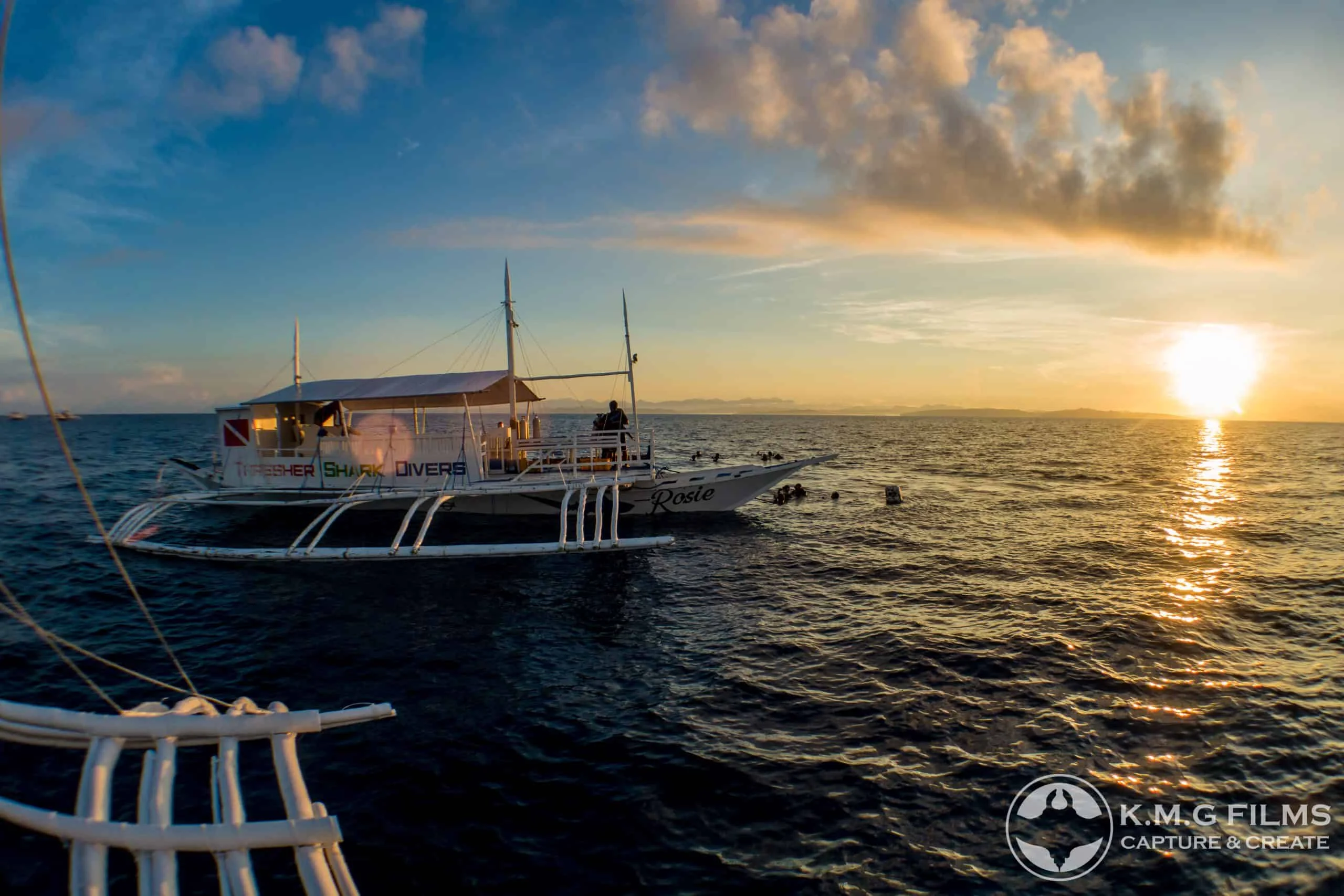
This is peak conditions. Visibility at Kimud regularly hits 20 to 30 metres. The sea is calm, the sky is blue, and the water is warm even by Malapascua standards. March to May is also when manta rays are most frequently spotted. If you care about underwater photography or just want the best possible chance of crystal-clear shark encounters, this is your window.
The trade-off: it’s busier. More divers, higher accommodation prices, and the island has a livelier (read: noisier) atmosphere. Book well in advance for April and May.
THE SHOULDER MONTHS: NOVEMBER TO FEBRUARY
The Amihan season brings the northeast monsoon, which means slightly choppier seas and reduced visibility on some days (10 to 15 metres is common). But here’s the thing: the threshers don’t care about visibility. They show up regardless. And fewer tourists means smaller dive groups, better availability, and lower prices on accommodation.
December and January can get windy, and occasionally a dive site will be inaccessible due to swell. But “occasionally” is the key word. Most days, everything runs normally.
Fun fact: our hammerhead season peaks around December to April. We’ve had encounters with schools of over 100 hammerheads at Deep Slope during this period. Not guaranteed, but when it happens, it’s the kind of thing you tell people about for years.
THE WET SEASON: JULY TO OCTOBER
Habagat season. The southwest monsoon brings rain, sometimes heavy, and the occasional storm. Visibility drops, seas can be rougher, and yes, the odd day gets weathered out entirely. This is also typhoon season, though Malapascua’s position means it’s less exposed than other parts of the Philippines.
The upside? Lowest prices of the year, virtually no crowds, and surprisingly good marine life. Nutrient-rich water from the rains brings in more plankton, which attracts more fish, which occasionally attracts bigger visitors. Some of our most memorable whale shark sightings have been during this period.
SO WHAT DO WE RECOMMEND?
If it’s your first time and you want the safest bet for great conditions: March to May. If you’re flexible and want value: November or February. If you’re a seasoned diver who doesn’t mind a bit of weather and loves having dive sites to yourself: July to October.
The one thing we’d say with total confidence: don’t overthink it. People delay their Malapascua trip for years trying to find the perfect window. Meanwhile, the thresher sharks are at Kimud every morning, doing their thing, completely indifferent to your planning anxiety.
Just book it. Head to thresher-shark-divers.com for current packages and availability.

About Andrea Agarwal
Andrea Agarwal is a PADI Master Instructor and the founder of Thresher Shark Divers on Malapascua Island, Philippines. Originally from the UK, she moved to the Philippines in 2003 and built what is now one of the largest and most respected dive operations in the country. TSD is a PADI 5-Star Career Development Center (CDC) and the only PADI TecRec facility on Malapascua. Andrea has spent over 20 years diving Malapascua's waters and has been instrumental in developing its reputation as the world's best destination for daily thresher shark encounters.
A quick overview of the topics covered in this article.